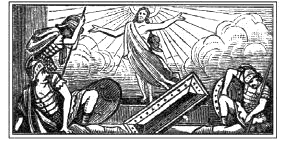
| Contents | Nox et tenebrae et nubila Day is breaking, dawn is bright |
Hymni |

This hymn is a cento from the Morning Hymn of the Cathemerinon of Prudentius (384-413). It is a traditional hymn for Lauds and is the hymn for Lauds for Wednesday for the 1st and 3rd weeks of the Psalter during Ordinary Time. Likewise it is found as the hymn for Wednesday Lauds in the Roman Breviary.
|
| NOX et tenebrae et nubila, confusa mundi et turbida, lux intrat, albescit polus: Christus venit; discedite. |
DAY is breaking, dawn is bright: Hence, vain shadows of the night! Mists that dim our mortal sight, Christ is come! Depart! |
| Caligo terrae scinditur percussa solis spiculo, rebusque iam color redit vultu nitentis sideris. |
Darkness routed lifts her wings as the radiance upwards springs: through the world of wakened things life and color dart. |
| Sic nostra mox obscuritas fraudisque pectus conscium, ruptis retectum nubibus, regnante pallescet Deo. |
- |
| Te, Christe, solum novimus, te mente pura et simplici rogare curvato genu flendo et canendo discimus.1 |
Thee, O Christ, alone we know, singing even in our woe, with pure hearts to Thee we go: on our senses shine! |
| Intende nostris sensibus vitamque totam dispice: sunt multa fucis illita quae luce purgentur tua.2 |
In Thy beams be purged away all that leads our thoughts astray! Through our spirits, King of day, pour Thy light divine! |
| Sit, Christe, rex piissime, tibi Patrique gloria cum Spiritu Paraclito, in sempiterna saecula. Amen. |
Unto God the Father, Son, Holy Spirit, Three in One, one in Three, be glory done, now and evermore. Amen. |
| Latin from the Liturgia Horarum. Translation by William John Courthope (1842-1917), from Church Hymns (1903). Changes made by Pope Urban VIII in 1632 to the Roman Breviary: 1 flendo et canendo quaesumus,/ intende nostris sensibus. 2 Sunt multa fucis illita,/ quae luce purgentur tua:/ tu, vera lux caelestium,/ vultu sereno illumina. |
<- Prev |
Next-> |